

Join Little Creek Baptist Church as they celebrate their 104th Anniversary on Sunday, October 13, 2014.
Little Creek Baptist Church was founded in the Ramsey Springs Community in 1909.
Join Little Creek Baptist Church as they celebrate their 104th Anniversary on Sunday, October 13, 2014.
Little Creek Baptist Church was founded in the Ramsey Springs Community in 1909.
Jed O’neal came from a long line of Stone Countians. His grandfather Van O’neal donated 40 acres of land to help establish the Harrison County Agricultural High School (HCAHS). Over the years. HCAHS became first Perkinston Junior College and later the Perk Campus of Mississippi Gulf Coast Community College.
Jed’s parents, Ford and Jewel O’neal were well known Stone County folks. Mom Jewel for years taught in the Wiggins and Stone County Schools.
Perhaps one of the best examples of the initiative within Stone County folks is the story of how Jed got the new steeple for the Little Creek Baptist Church in the Ramsey Springs Community from the manufacturer to the church. Smile as you read the story here.
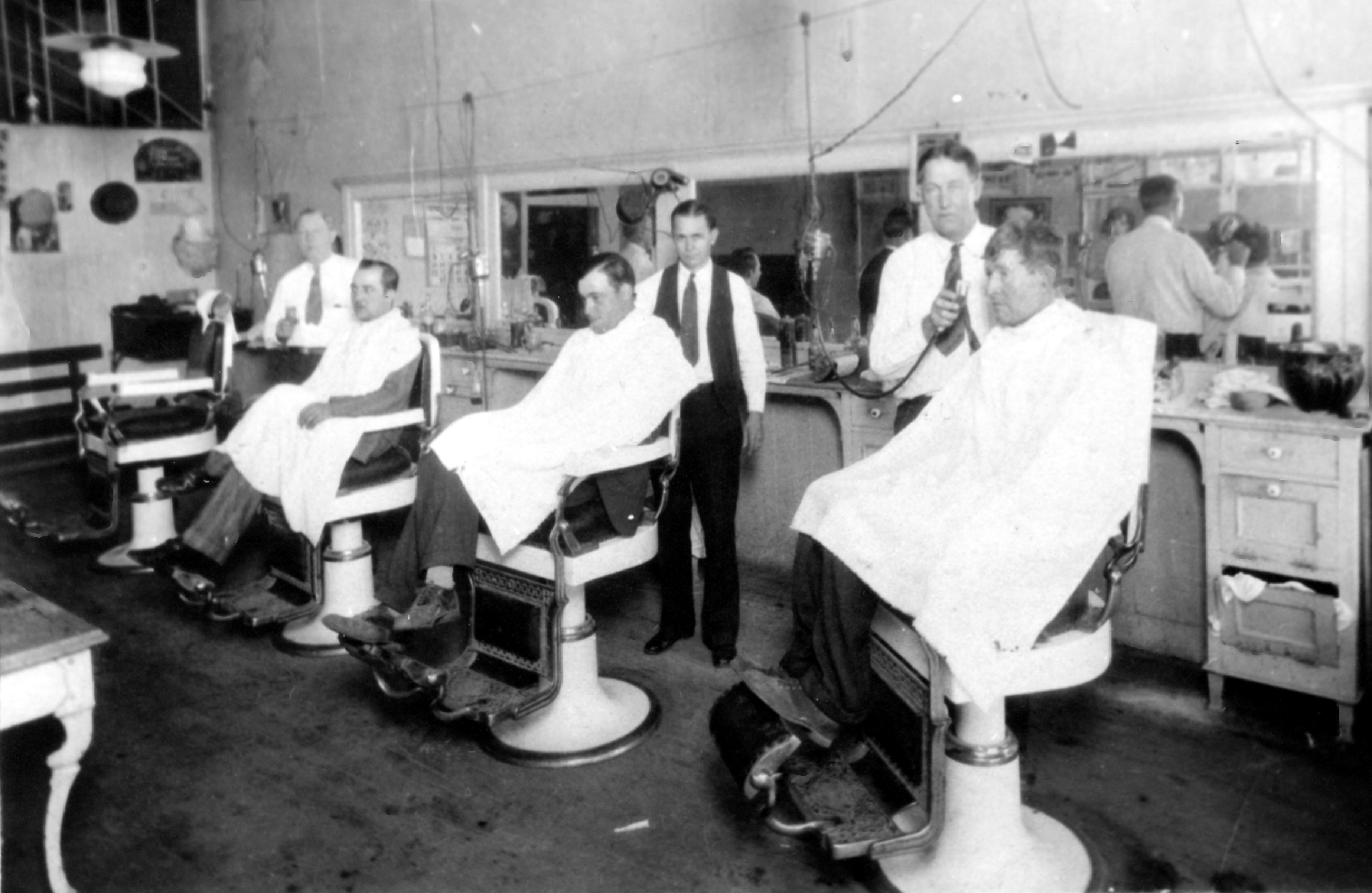
Thanks Russ Hatten for sharing this. Ray Blaylock, the owner is the barber in the center. His shop was an icon for many many years in Wiggins!
W.P.A. for Mississippi Historic Research Project
February 10, 1939
Subject: Fine Arts and Crafts
The writer listed the names of the persons in the county who were accomplished artists. One of the artists was Miss Bell Ingersol. A description of her talents and accomplishments in the field of Drama follows:
Miss Bell Ingersol, who lives in Stone County ,recently moved from the East and lives with her parents on a farm ( located three miles east of Wiggins). Miss Ingersol is a former actress and playwright. She has played the leading part in several theatrical productions and traveled extensively with theatrical troupes.
She played in moving pictures during silent picture days and has worked and studied in Chicago and Detroit under well known picture directors of that time.
Another “Fun Fact” noted that Mr. Cicero Cunningham was known to keep a pair of her shoes in his display case!

A History of Towns & Communities in Harrison & Stone Counties Mississippi
Compiled by LeRoy F. Eastes
In January , 1910 , there was a serious fire in the business district of Wiggins. Three city blocks were consumed, while other buildings were dynamited to prevent the fire from spreading. At 11 o’clock in the morning, a raging wind from the northwest swept the fire through the business center of the town, causing a property loss between $100,000 and $150,000.
The Gulf Island Ship Island depot and Peoples Bank were destroyed. Other businesses wiped out included, but were not limited to: Wiggins Mercantile Co., Foote & Bond Mercantile Co., W.W. Burnette & Co. (mercantile), The Burnette Hotel, the Schwartz Dry Goods Company store, two livery stables (owned by L.W. Davis and D.J O’Neal), and several small grocery stores including Lindsay & Co. and Wiggins Grocery Co.
Three box cars were sent to Wiggins to be used as a temporary depot following the fire.
From: W.P.A. for Mississippi Research Project, July 7th , 1936
By Marshall Taylor and H.V. Redfield
Subject: EDUCATION “Schools of Yesterday”
The early school days of Stone County date back to the early part of the nineteenth century. Schools in those days were organized by citizens residing in their respective communities. The buildings were of logs, an the benches of hewn timbers and there were no desks at all. The patrons financed these schools, paying $1.00 per month for each pupil attending and usually taking turns among them, boarding the teachers.
One of the first schools of Stone County was located in the western part of the county on Griffin’s Branch, eleven miles northeast of Wiggins. This school was known as the Davis-Perkins School, named after two of its founders. It was a private pay school and was founded about 1871 by William Davis, Ben Perkins, Calvin Griffin, and others. Some of the early teachers of this school were Luther Cox, Mr. Reynolds, John Davis, and James Carpenter. This school operated at this location for four years; then it was reorganized and moved to a new location, five miles southwest of Bond. It continued at this location for several years and was known as the Eureka Public School.
From the 100th Anniversary Booklet (2007)
“When the sizzling summer sun arose over Wiggins on July 12, 1907, there was no Presbyterian church in the town, nor had there ever been. But, there were Presbyterians; devout, faithful, hard-working Christian men and women who had a determination to live for Christ in the tiny saw-mill town.
On this particular day the fervor of Wiggins Presbyterians had reached a new high. They had just experienced ten days of special meetings which were conducted by Evangelist J.F. Eddins and held in the Methodist Church. So great was their zeal for God that before the sun set, their mountain top experience was climaxed by the organization of The Wiggins Presbyterian Church with twenty-two charter members enrolled. Eighteen were received by letter from other churches, two upon profession of faith and two upon reaffirmation of faith. Seven children were baptized.”
So the church was born and was destined to become an effective witness for Christ in the community and state.

Dr. George Austin McHenry, who homesteaded in the area of South Stone County that now bears his name beginning in 1889, joined the United States Volunteers in 1898, as a contract surgeon with the rank of Captain. He served in the Spanish American War in Cuba, the Philippine insurrection, and in China. During his time in Cuba, Dr. McHenry directed the yellow fever hospital there. Since he was immune to the disease, he was able to help many others.
While serving in the Spanish American War, McHenry developed a close relationship with Leonard Wood, who later became Chief of Staff of the United States Army and was tasked with establishing military training sites throughout the United States. Because of this relationship, Dr. McHenry was instrumental in proposing the establishment of one of these training sites to be located south of Hattiesburg, Mississippi, because of the mild climate, available rail facilities, and geography. The site was selected, and in 1917 it became Camp Shelby, the largest state owned military training facility in the United States.
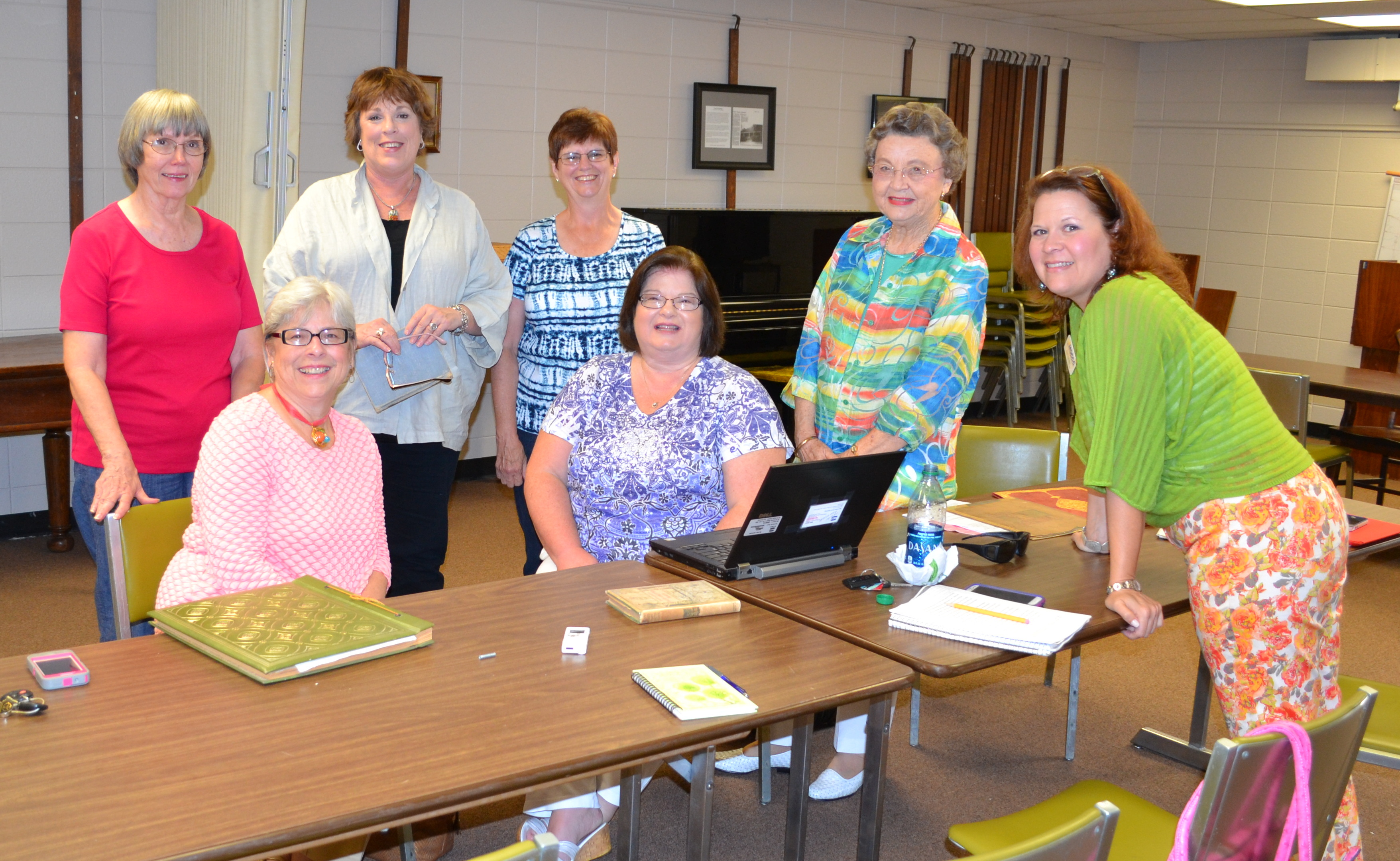
The project to share the lives and contributions of sisters Emilie and Marie Stapp kicked off August 20, 2013, at the Stone County Library – Wiggins Branch. These folks represented the various parties involved in the project. Back row (L-R): Carol Pearce (The Old Firehouse Museum), Ellen Ruffin (Curator, de Grummond Children’s Literature Collection (USM)), Linda Spitz (Friends of the Stone County Library), Betty Hearon (cousin by marriage to the Stapp Family), Daisha Walker (MGCCC and the Stone County Arts Council); Seated (L-R): Dottie Rausch (great niece of Emily and Marie Stapp), Eileen Day Gipson (great great niece of Emily and Marie Stapp).
 The Old Firehouse Museum